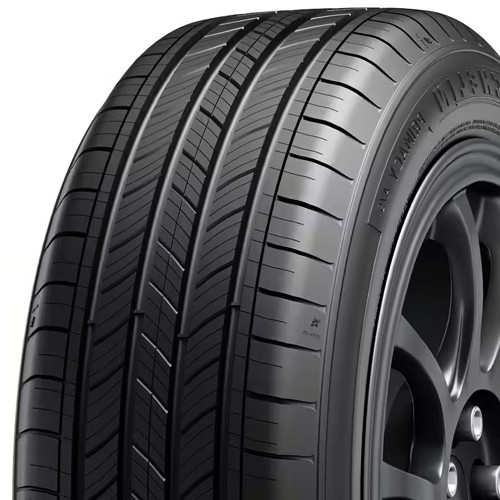
Nearly every major manufacturer now sells a self-sealing line under its own technology name. Here is who makes what.
Michelin
SelfSeal
A natural rubber sealant layer that seals roughly 90% of punctures, closing holes up to 6mm as they happen. Often paired with Michelin Acoustic foam on premium and EV fitments.
Continental
ContiSeal
Closes holes up to 5mm and prevents up to 80% of puncture-related damage. Marked with a green seal symbol on the sidewall and fitted as standard on many VW, Audi and Skoda models.
Pirelli
Seal Inside
A sealing layer on the inner liner that covers around 85% of typical puncture causes. Common original equipment on premium saloons and EVs that carry no spare.
Bridgestone
B-Seal
A viscous inner layer that plugs tread punctures as they happen, with no measurable pressure loss. Offered across selected touring fitments.
Goodyear
DuraSeal
Long established on commercial and off-road fitments, where puncture downtime is costly, and extended to selected passenger lines.
Hankook
Sealguard
A sealant layer offered on Ventus performance lines and a growing number of dedicated EV fitments.
Nokian Tyres
Self-sealing range
One of the few manufacturers bringing self-sealing construction to dedicated winter and all-weather tires.
Dunlop
Self-sealing range
Offers self-sealing construction across selected touring and performance fitments.
Toyo Tires
Self-sealing range
Offers self-sealing options on selected fitments, alongside its established puncture-resistant lines.
Already running standard tires? These pour-in and aerosol sealants add the same puncture protection to what you already own.